Walking Chair
Walking Chair
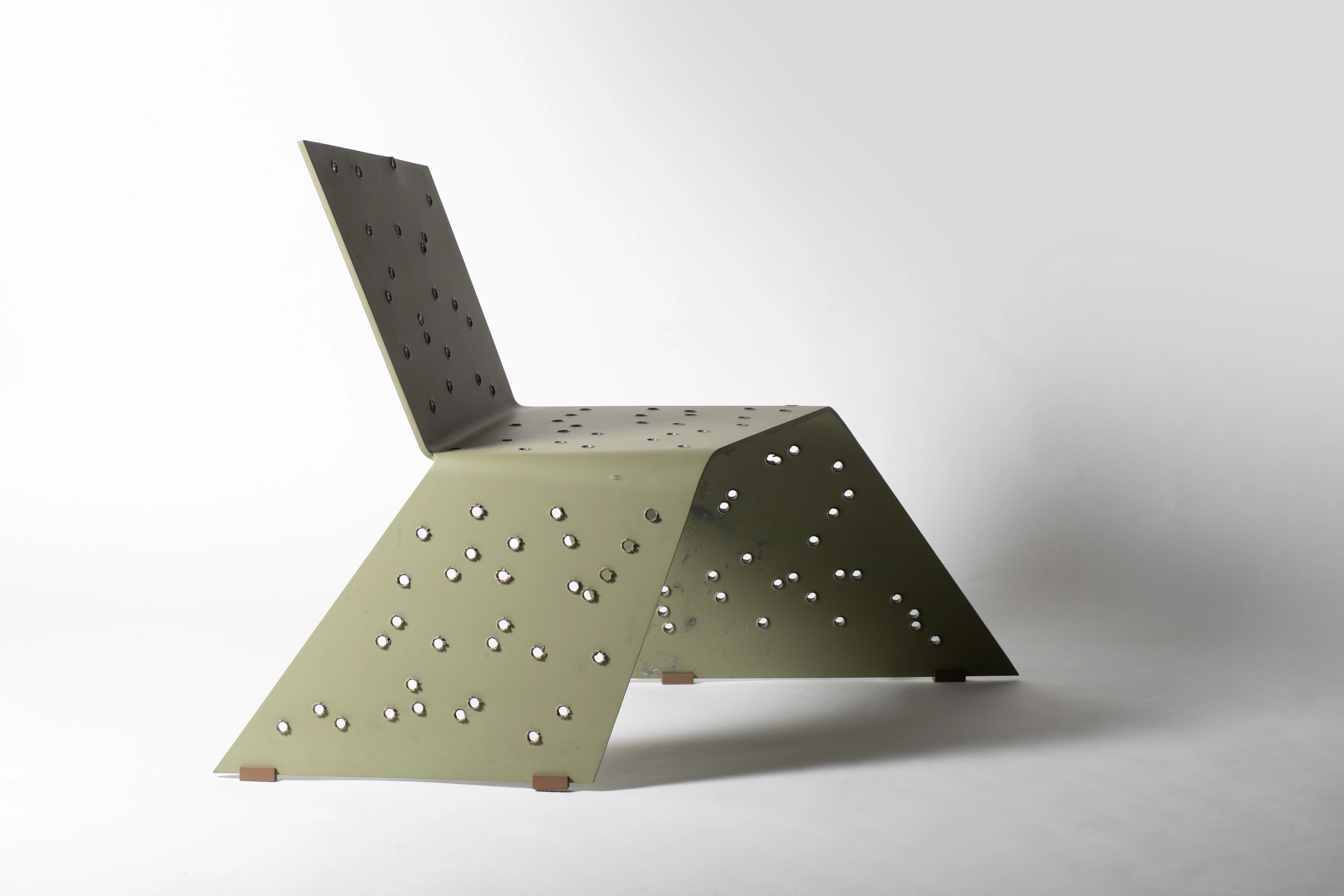
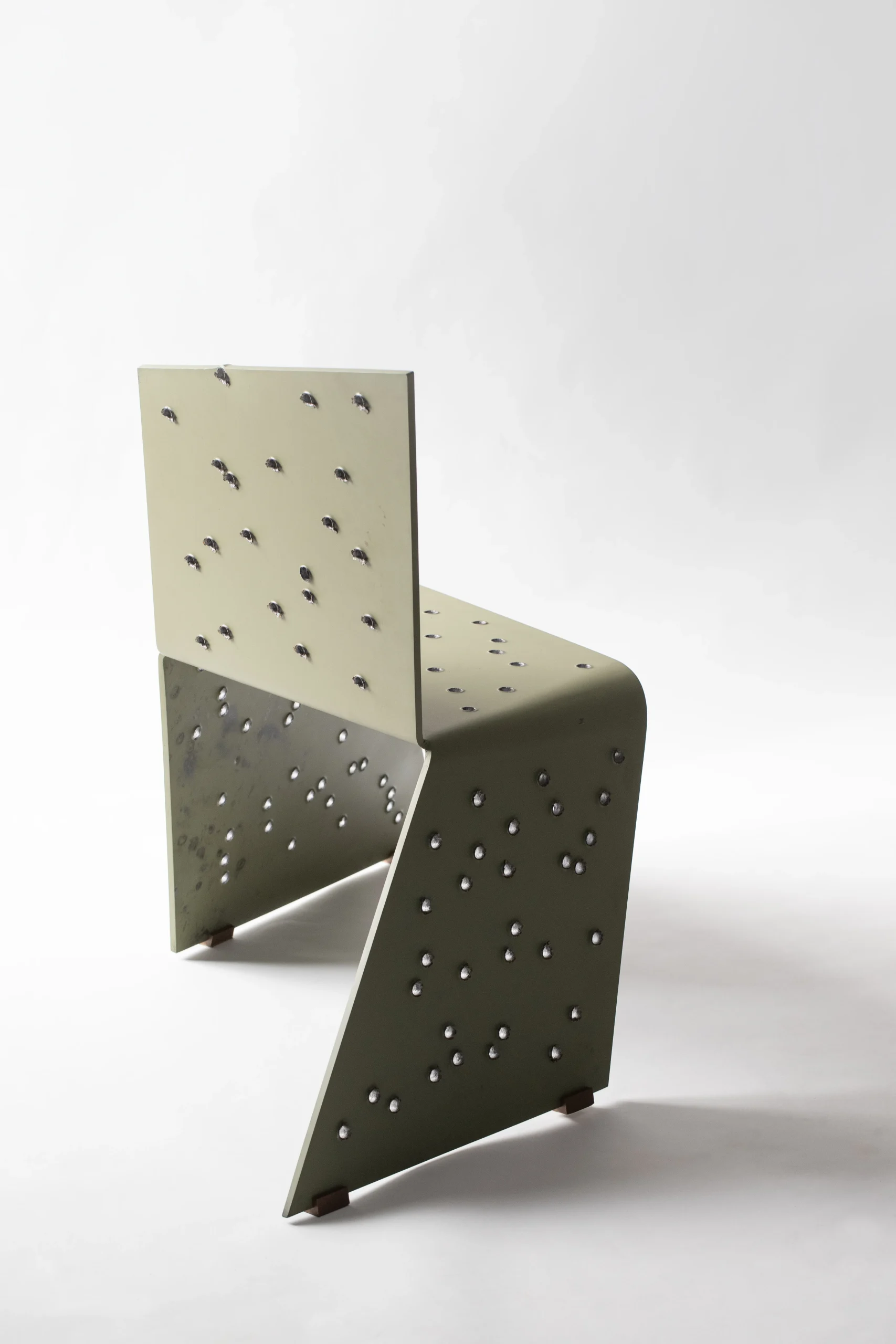
“Walking Chair” continues the long artistic lineage of the walking human figure — from cave paintings, Egypt, and antiquity to Rodin, Boccioni, Giacometti, and Housago — reimagining the human form as a piece of furniture.
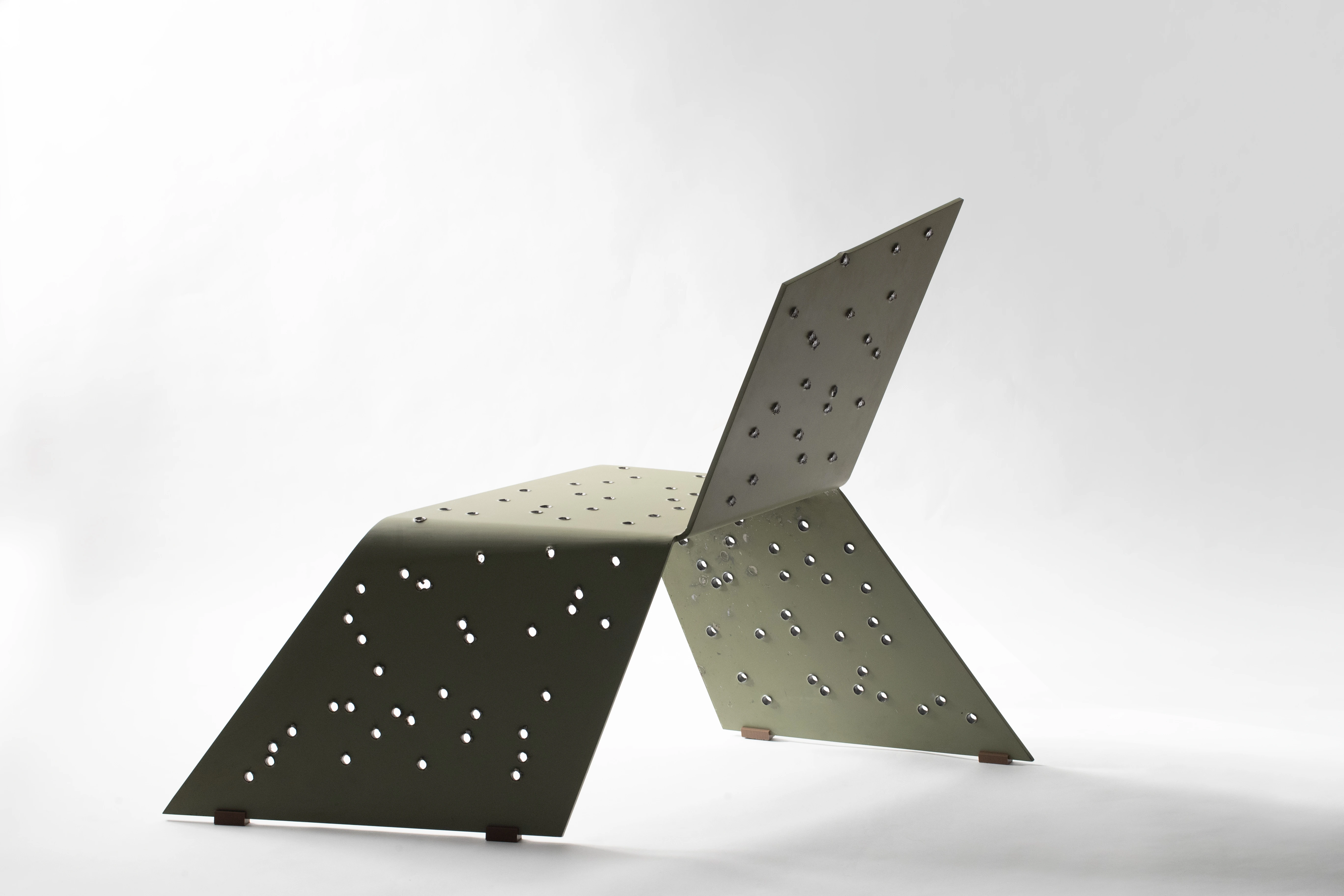
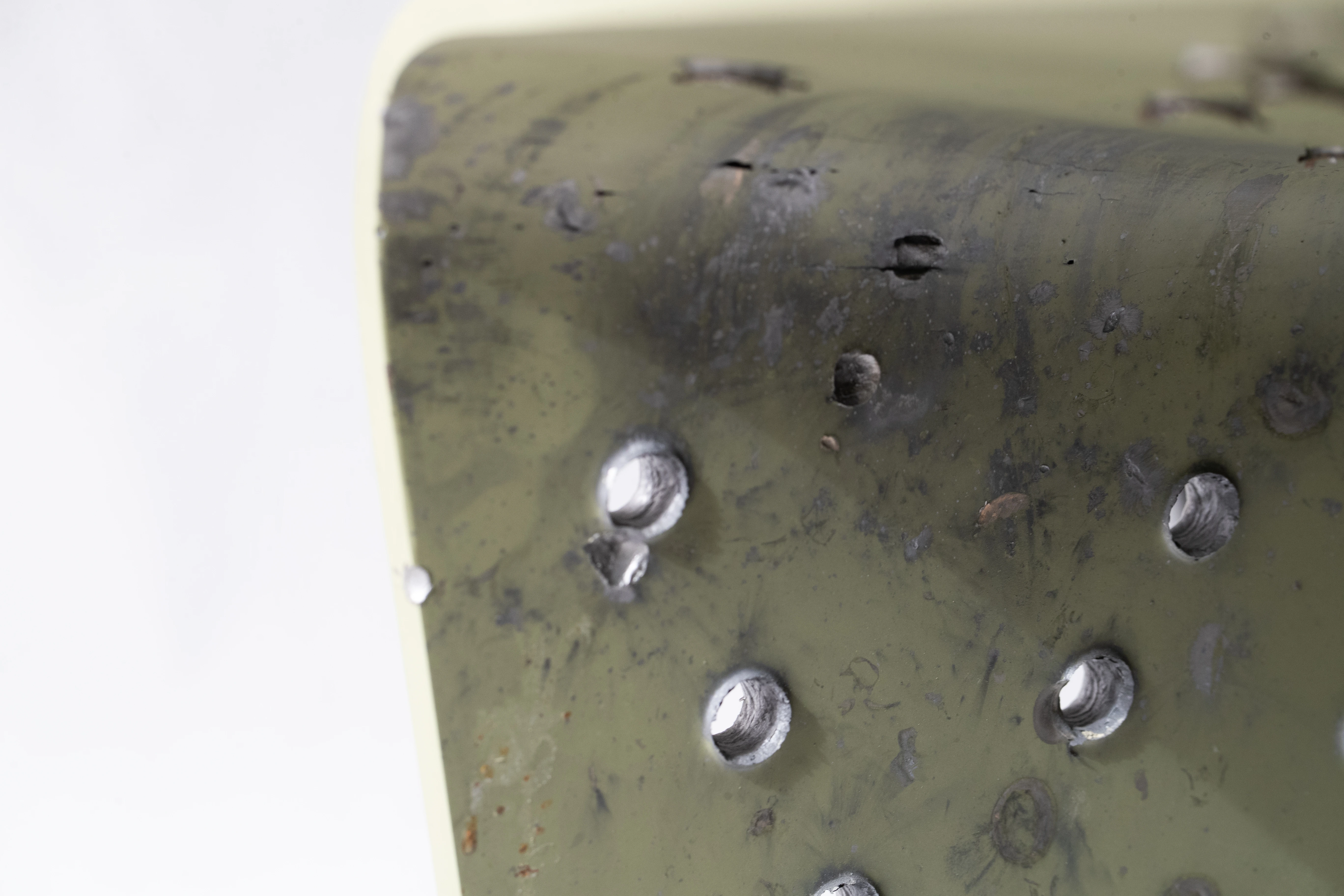
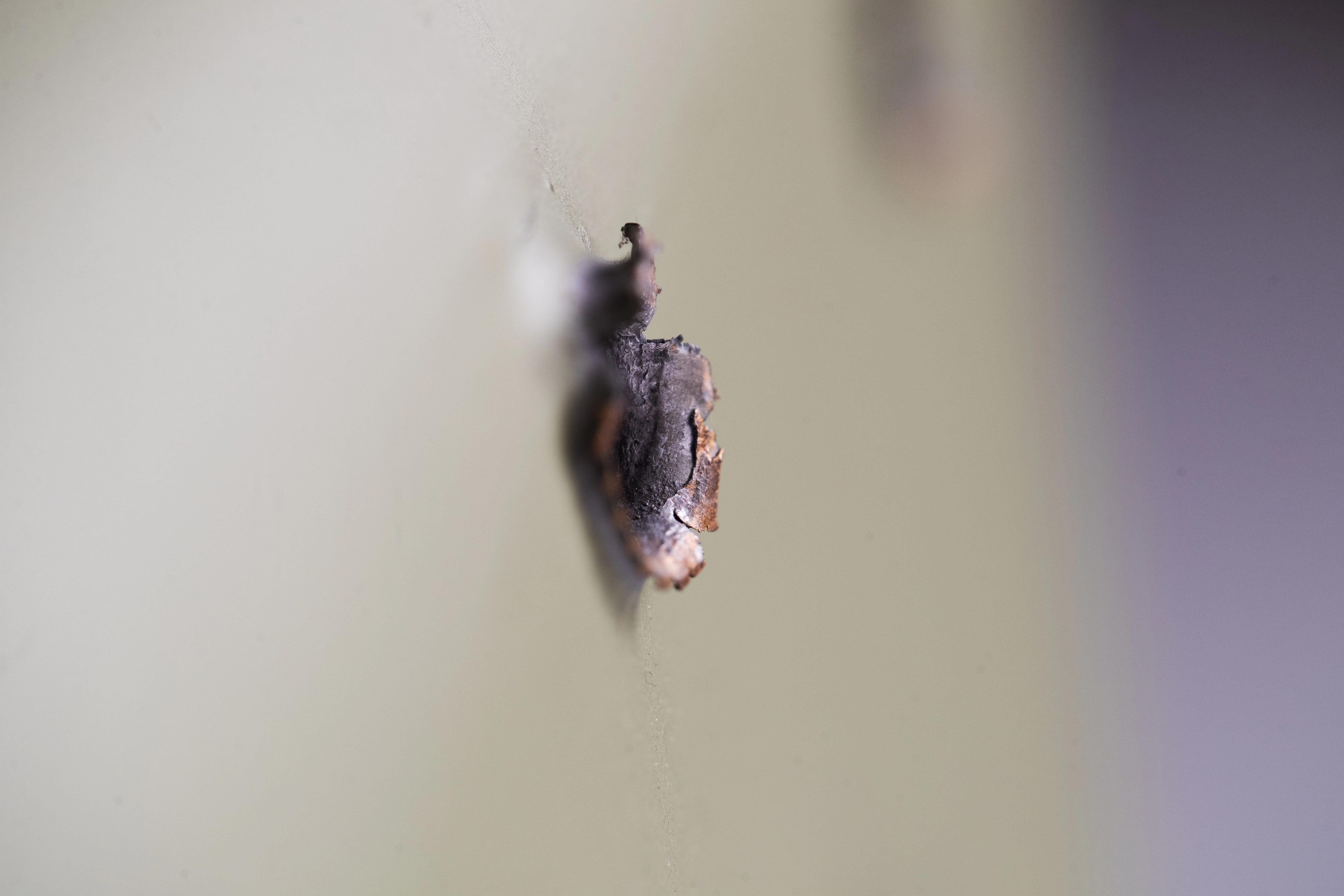
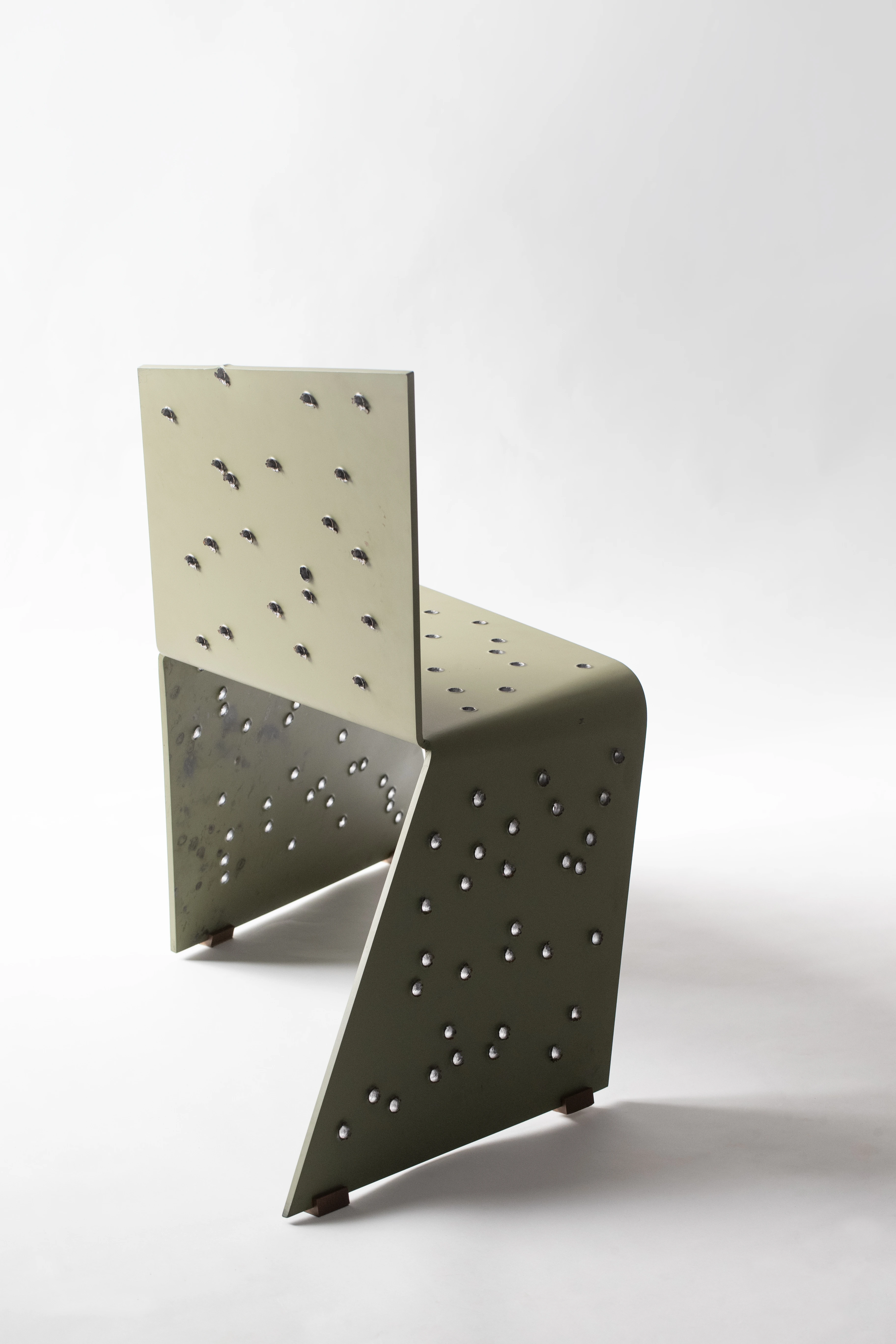
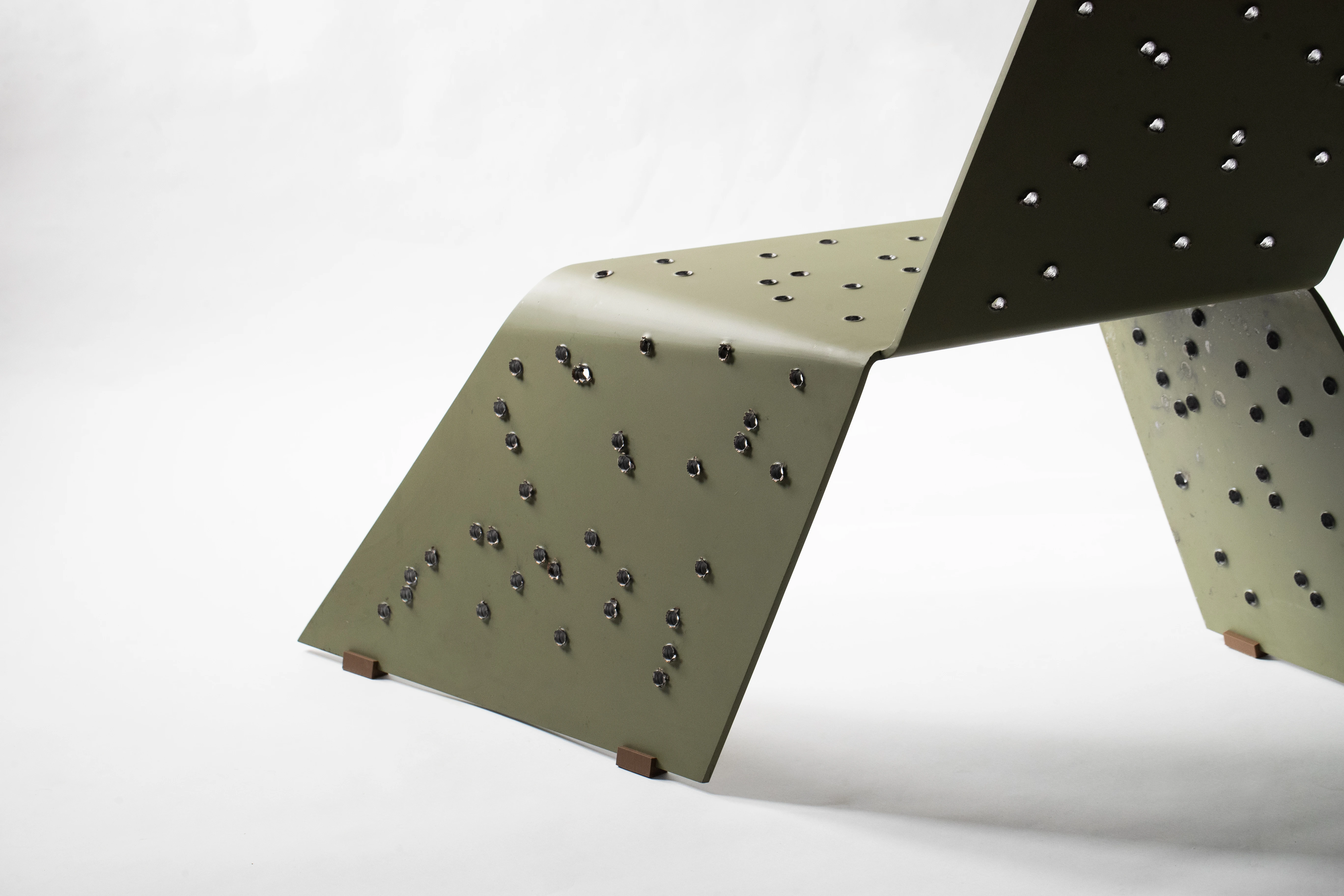
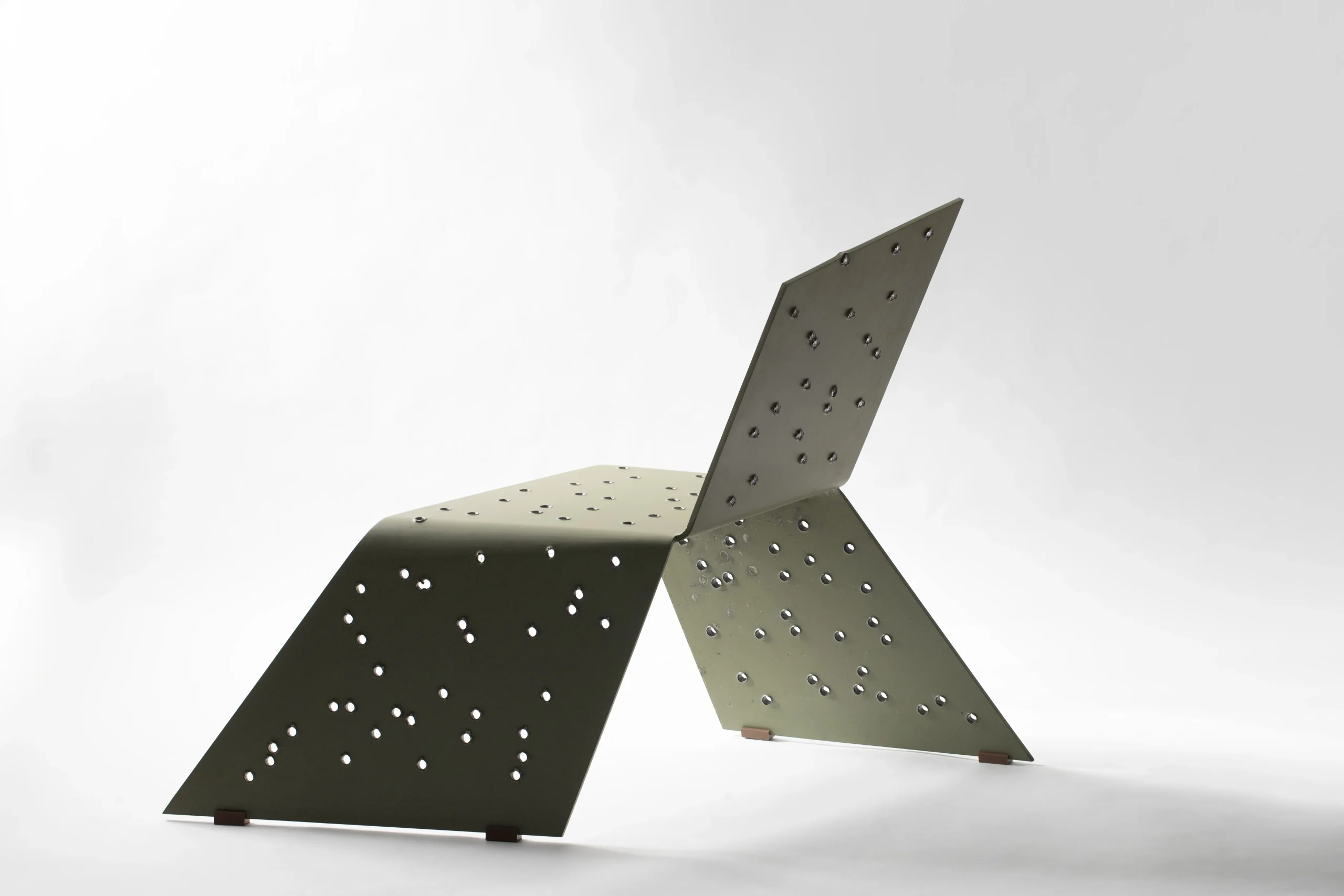
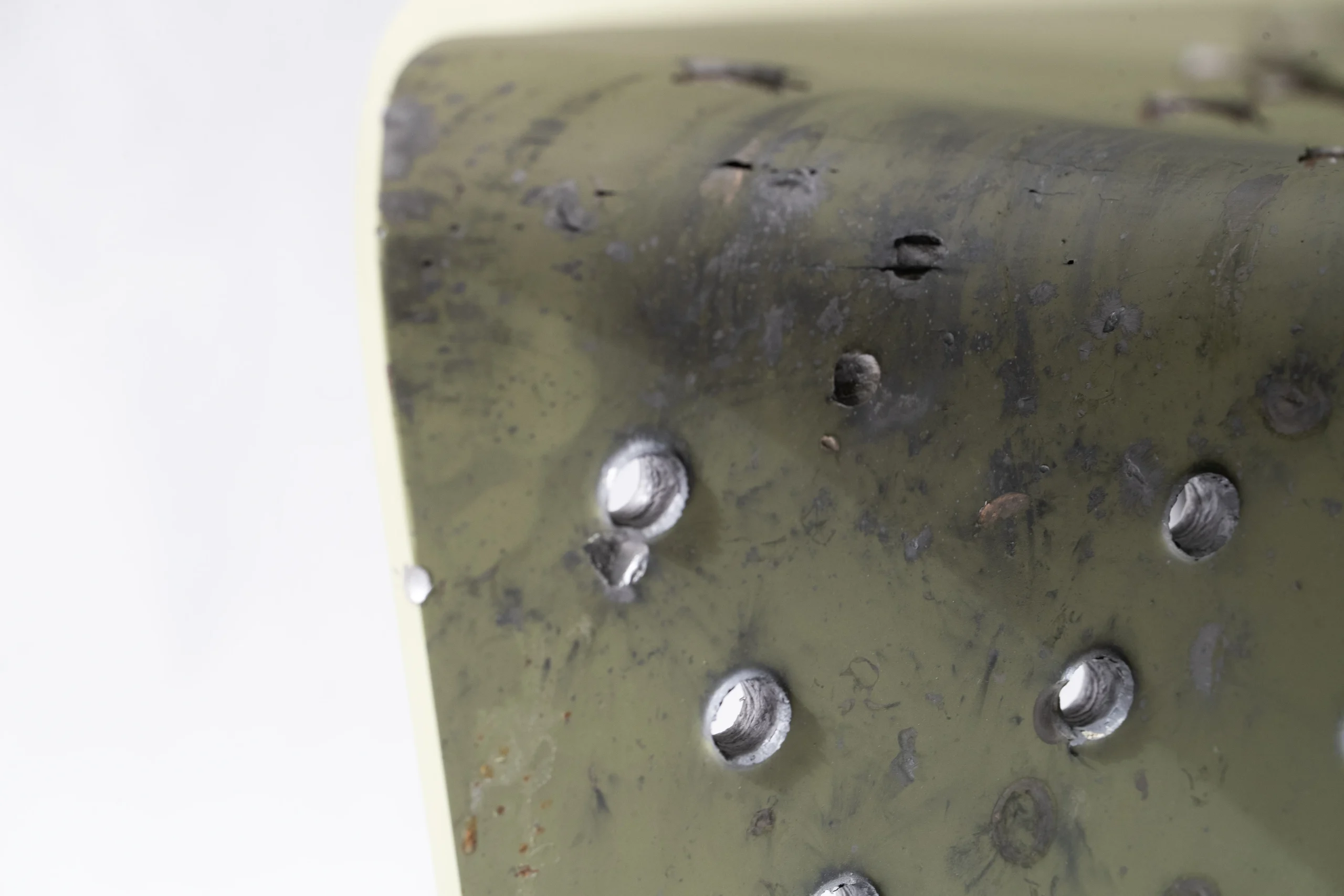
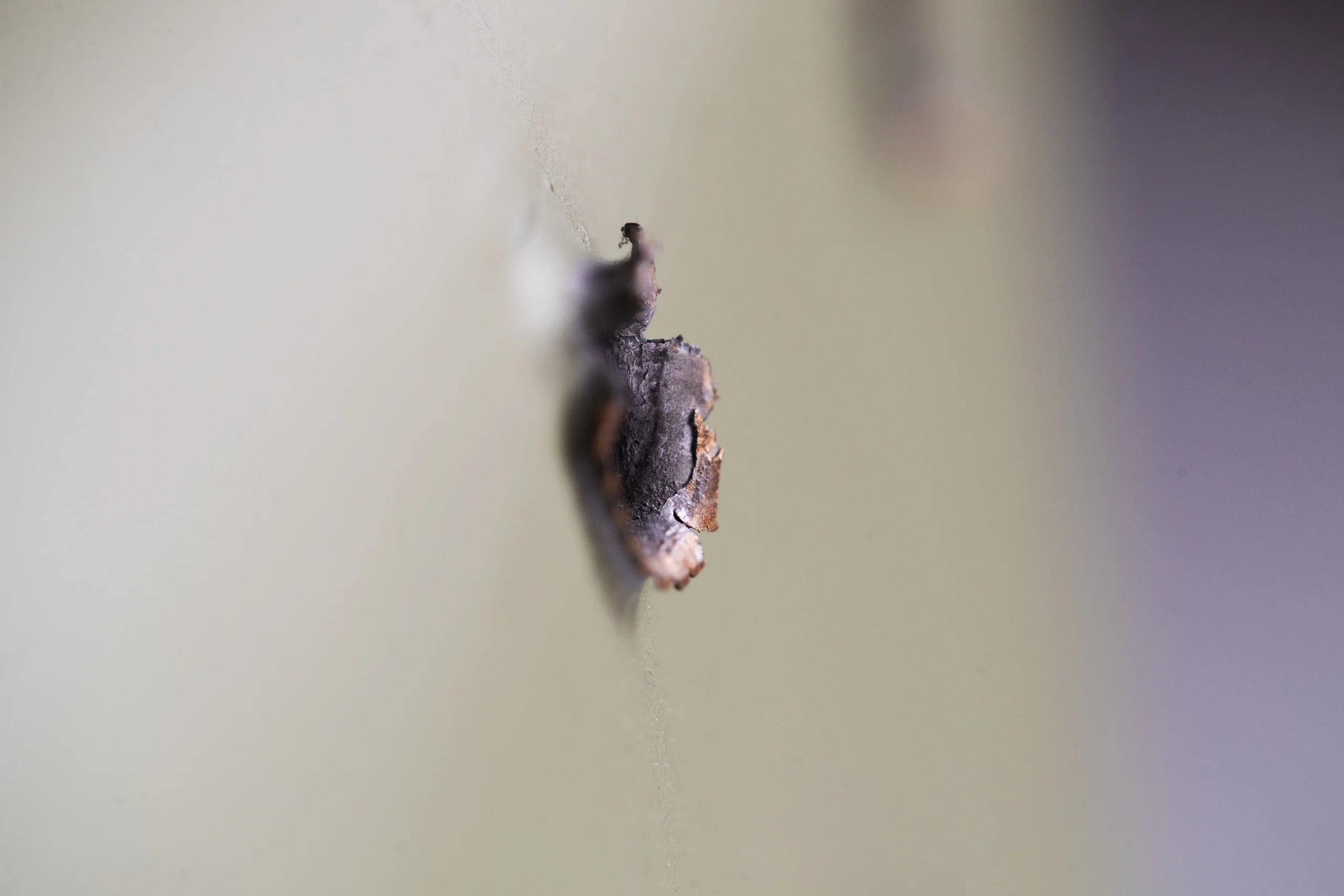
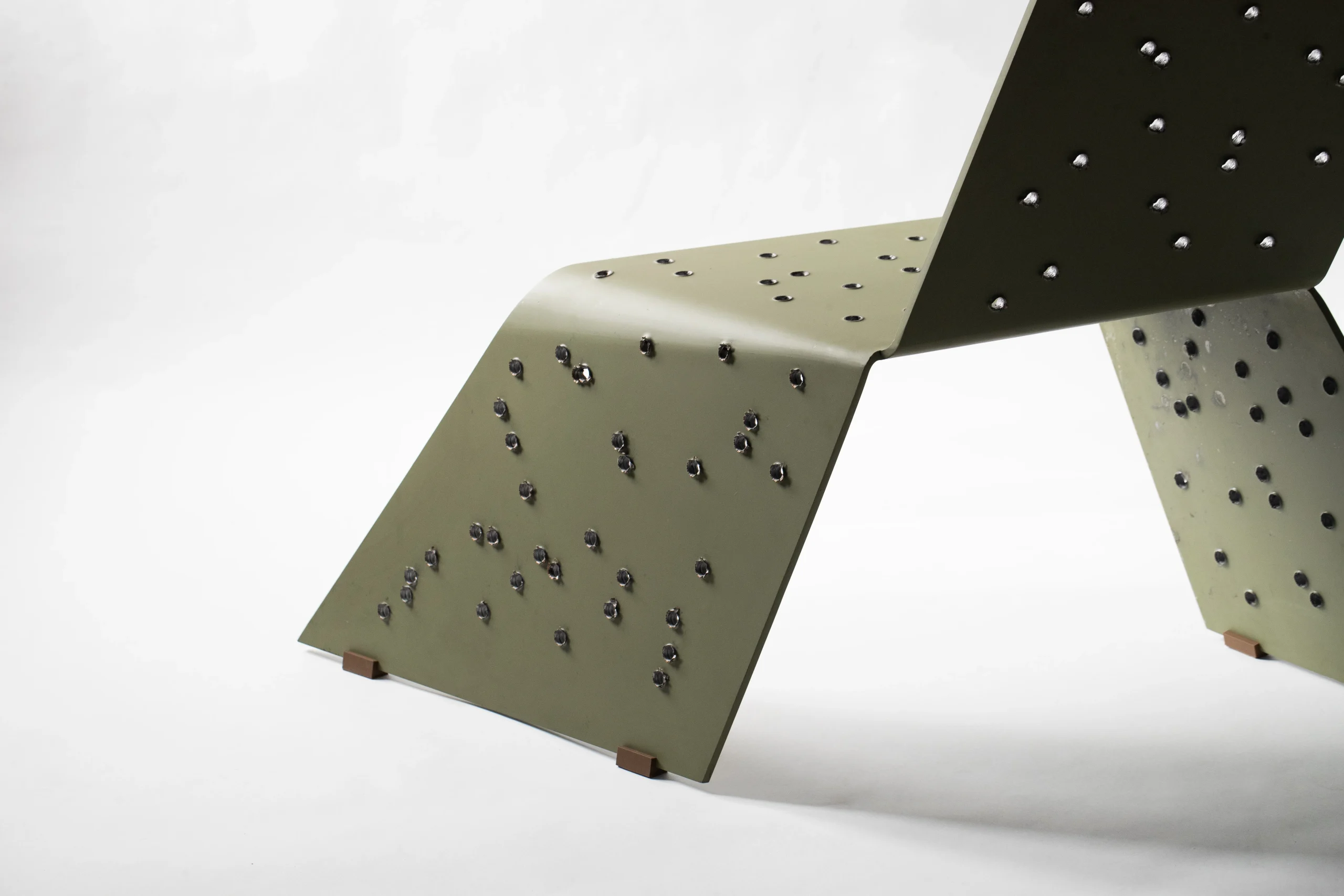
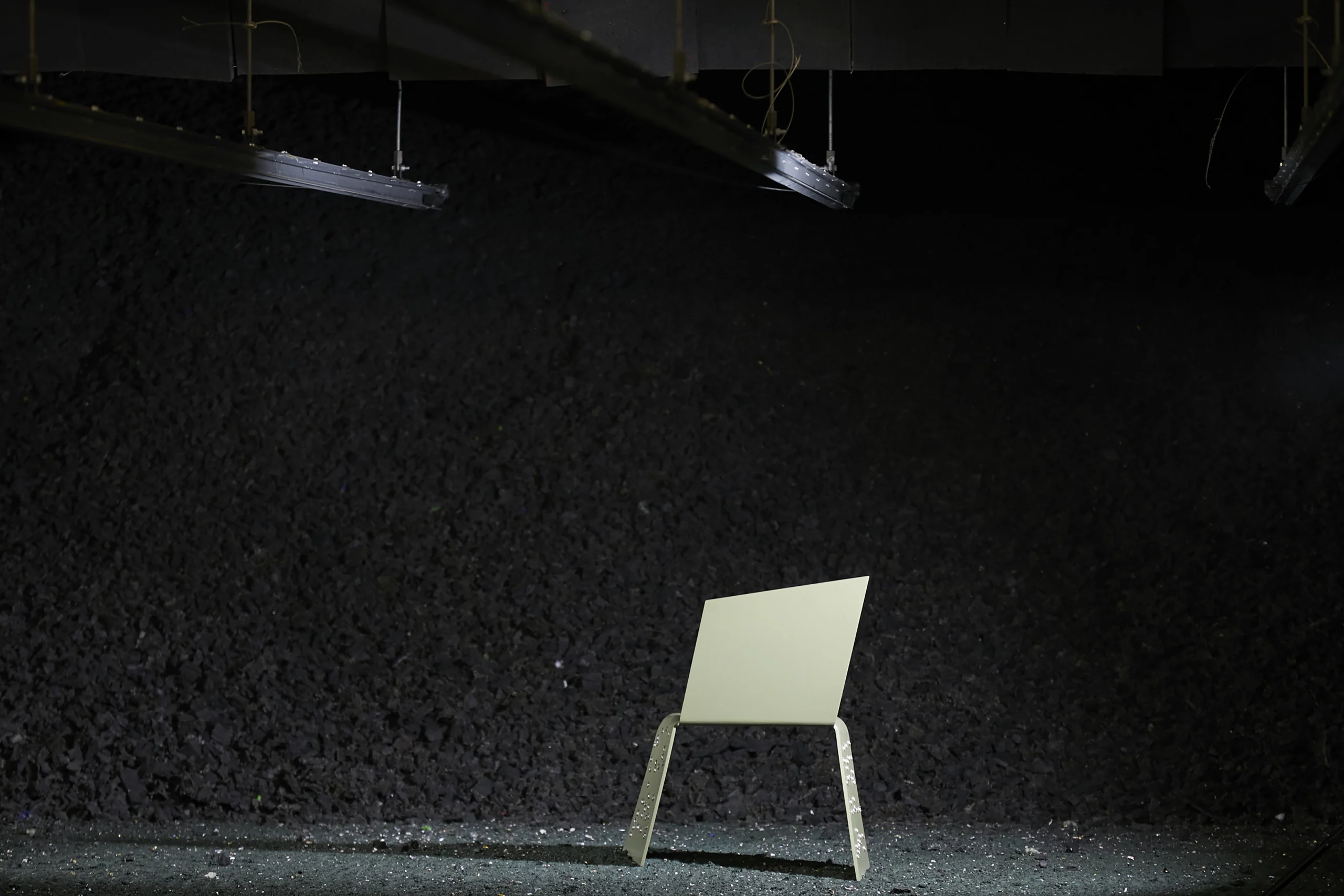
In this work, the chair becomes a contemporary individual: wounded, exhausted, yet still moving forward. Its bullet-pierced surface is not merely an aesthetic gesture but a literal trace of violence, a reminder that contemporary life is shaped by conflicts both visible and invisible.
Despite its scars, the form leans forward, symbolizing persistence and the drive toward a goal. The chair calls upon viewers to treat one another with caution, empathy, and respect, acknowledging that every person carries their own battles.
In this sense, “Wolking Chair” becomes a quiet monument to resilience — an object that embodies the struggle of the modern human who continues to move, even amid war.
Physical & Anthropomorphic Description
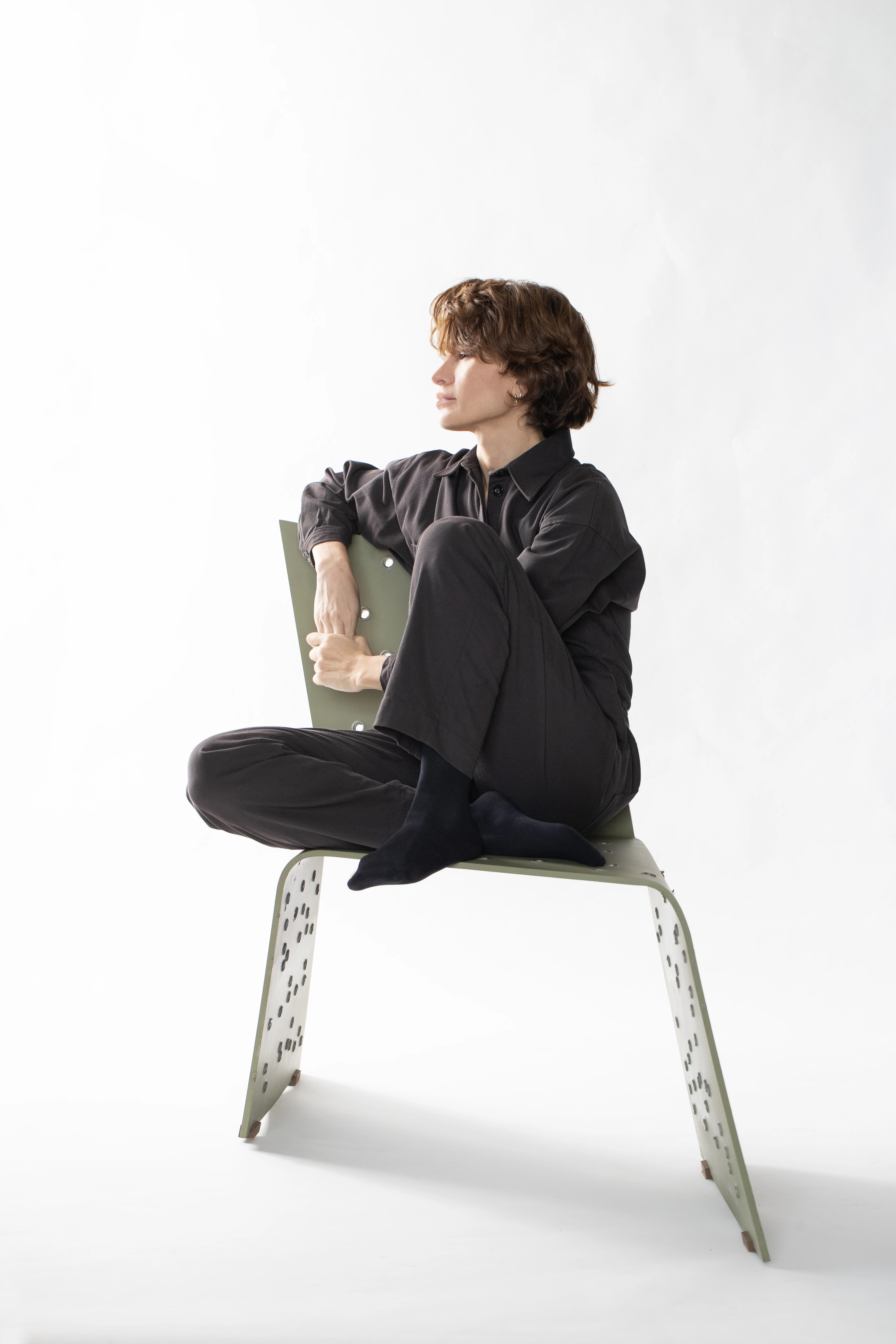
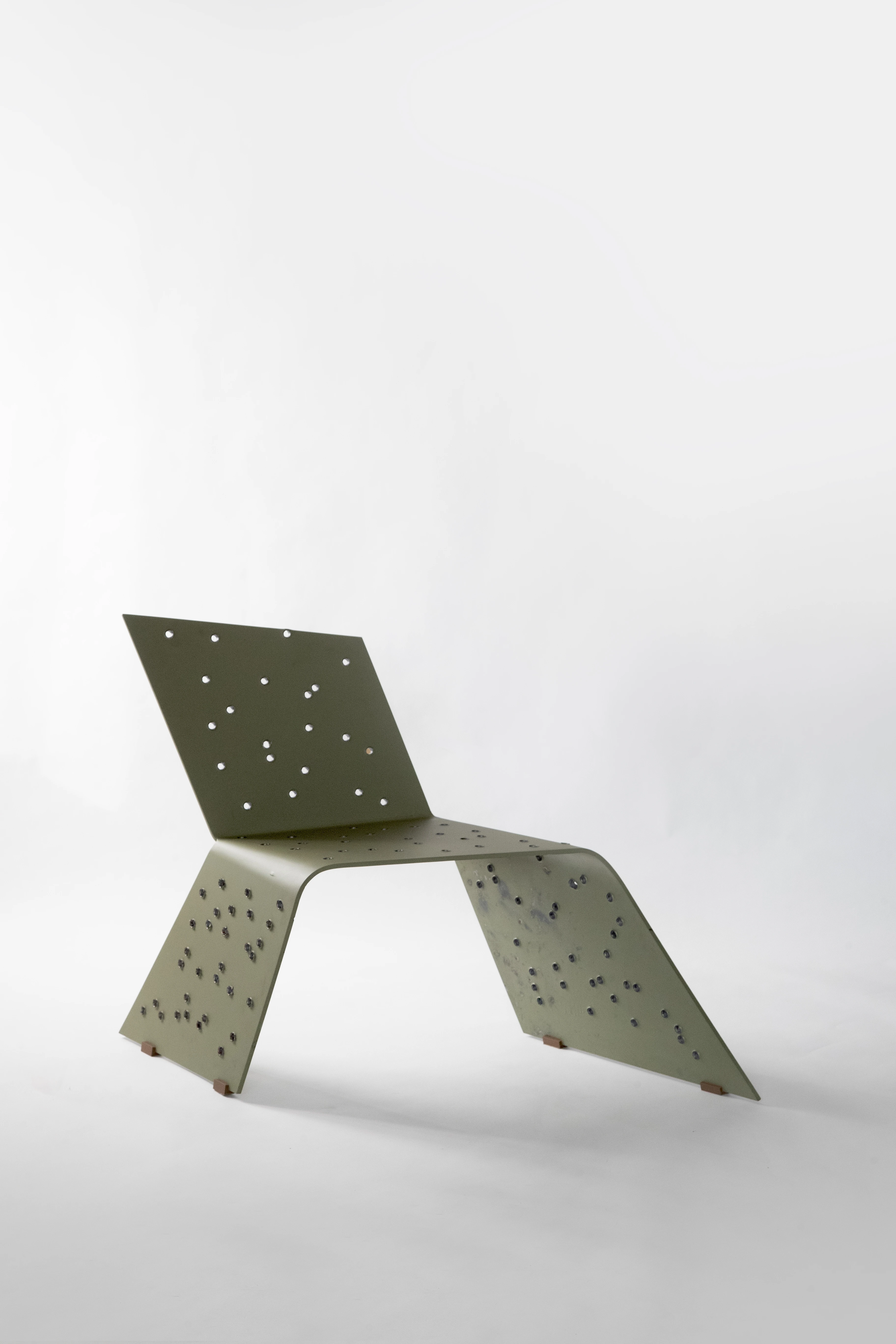
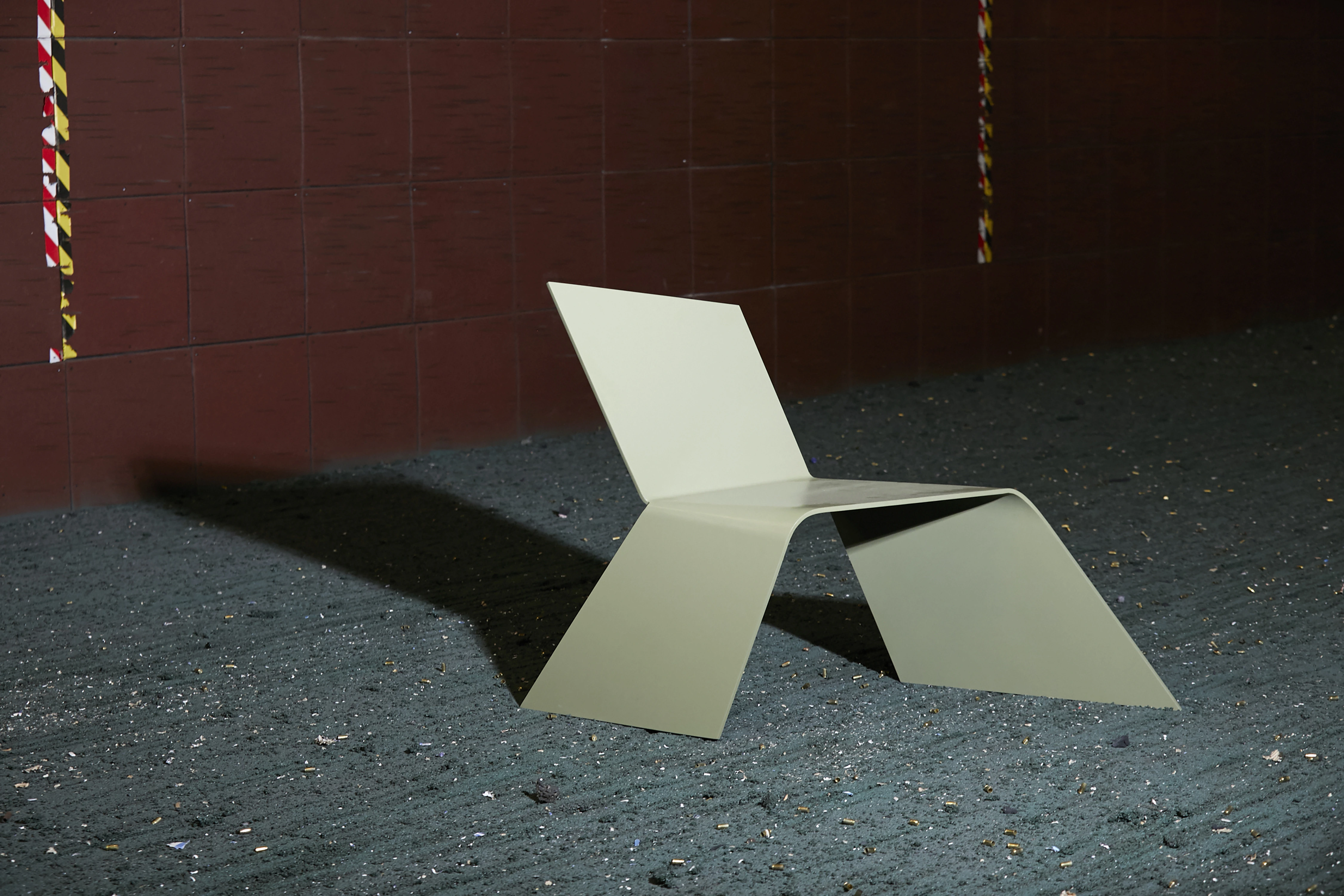
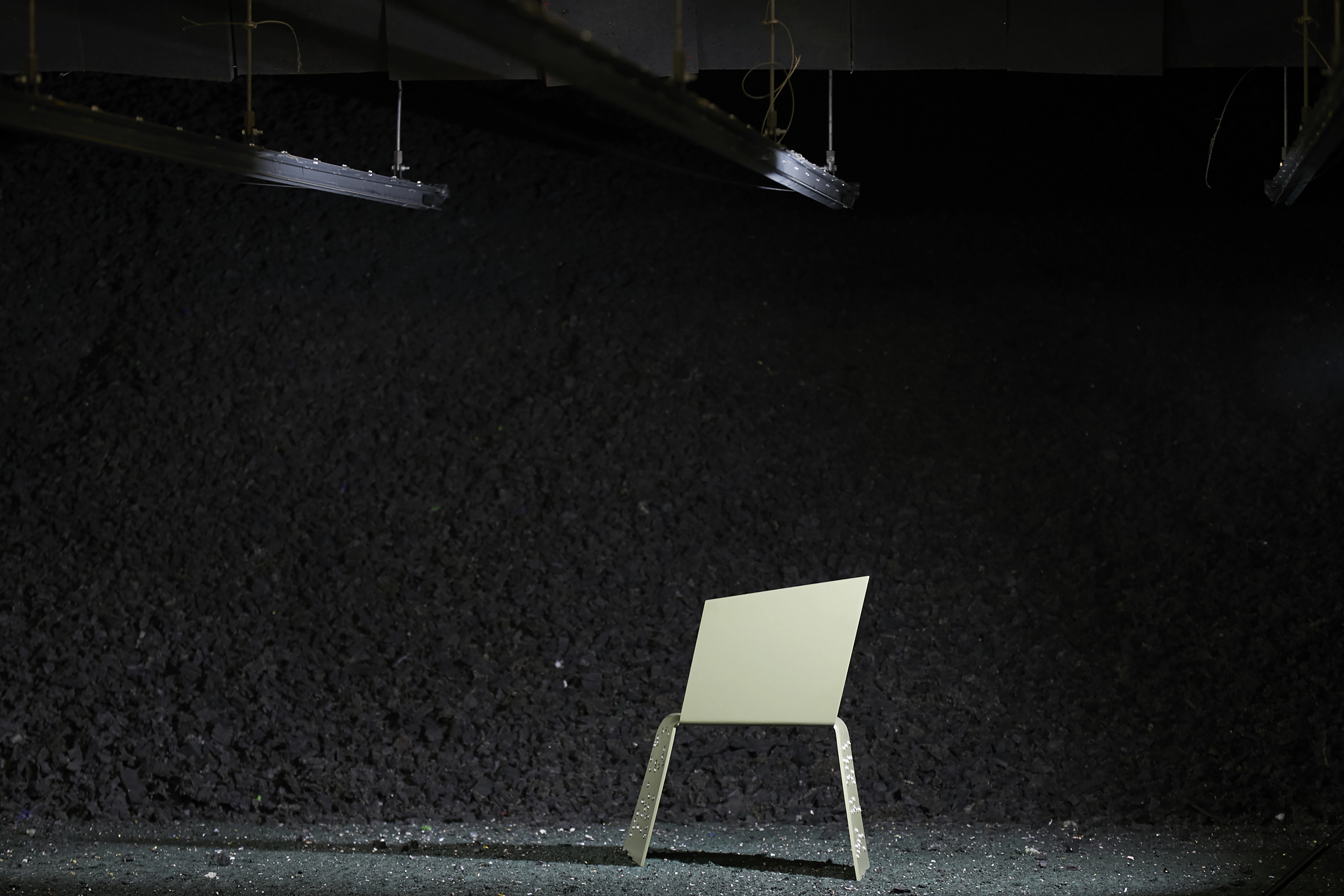
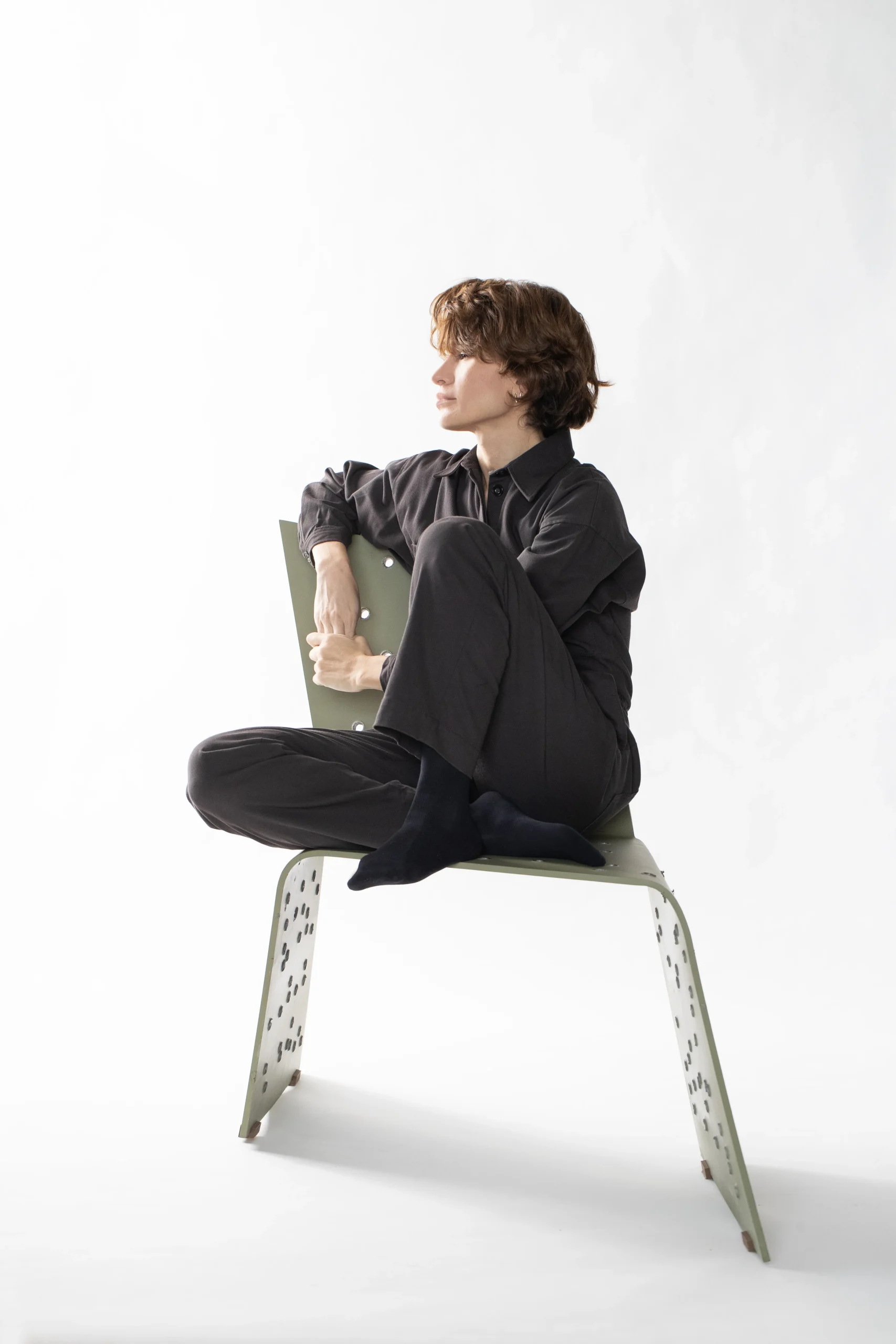
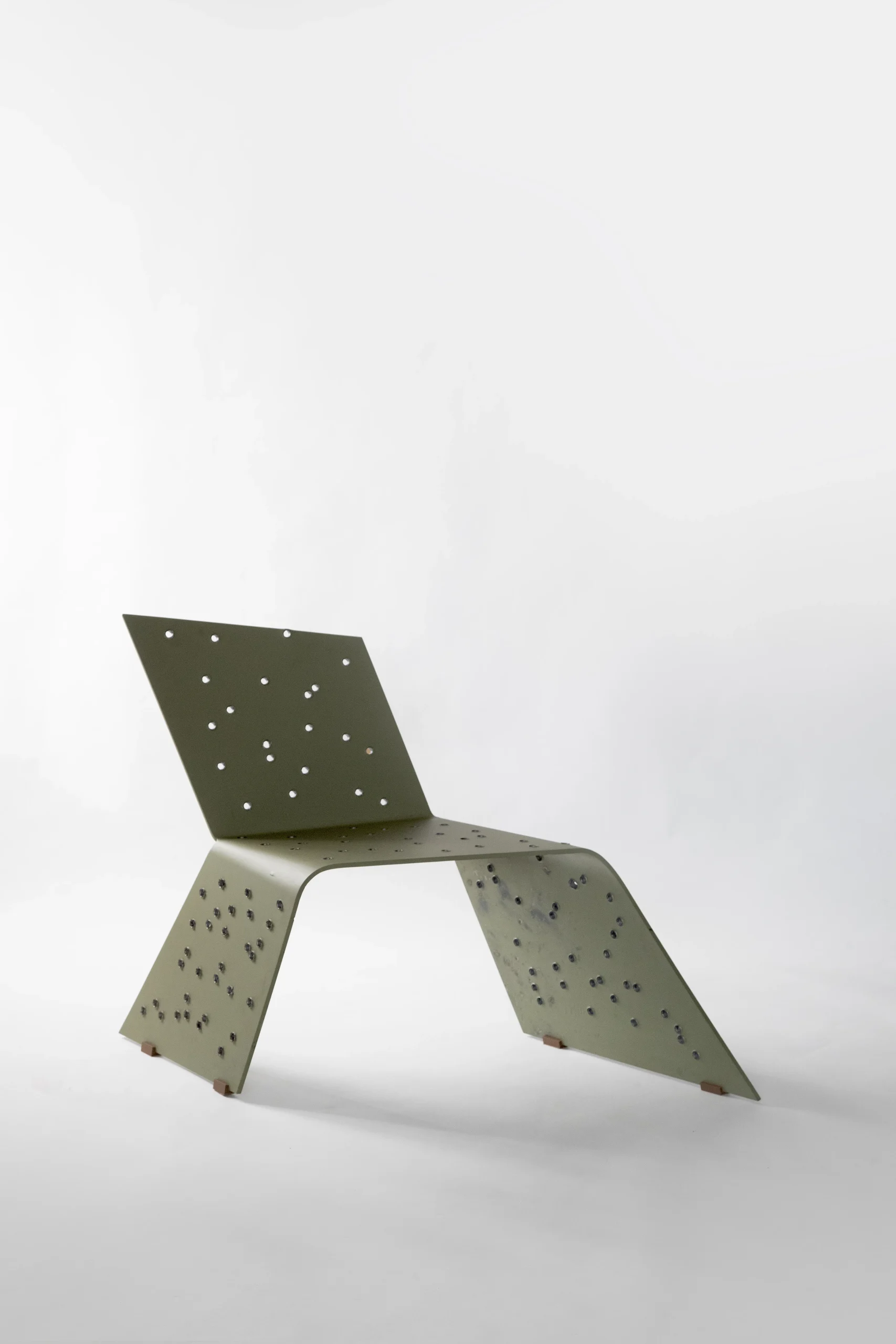
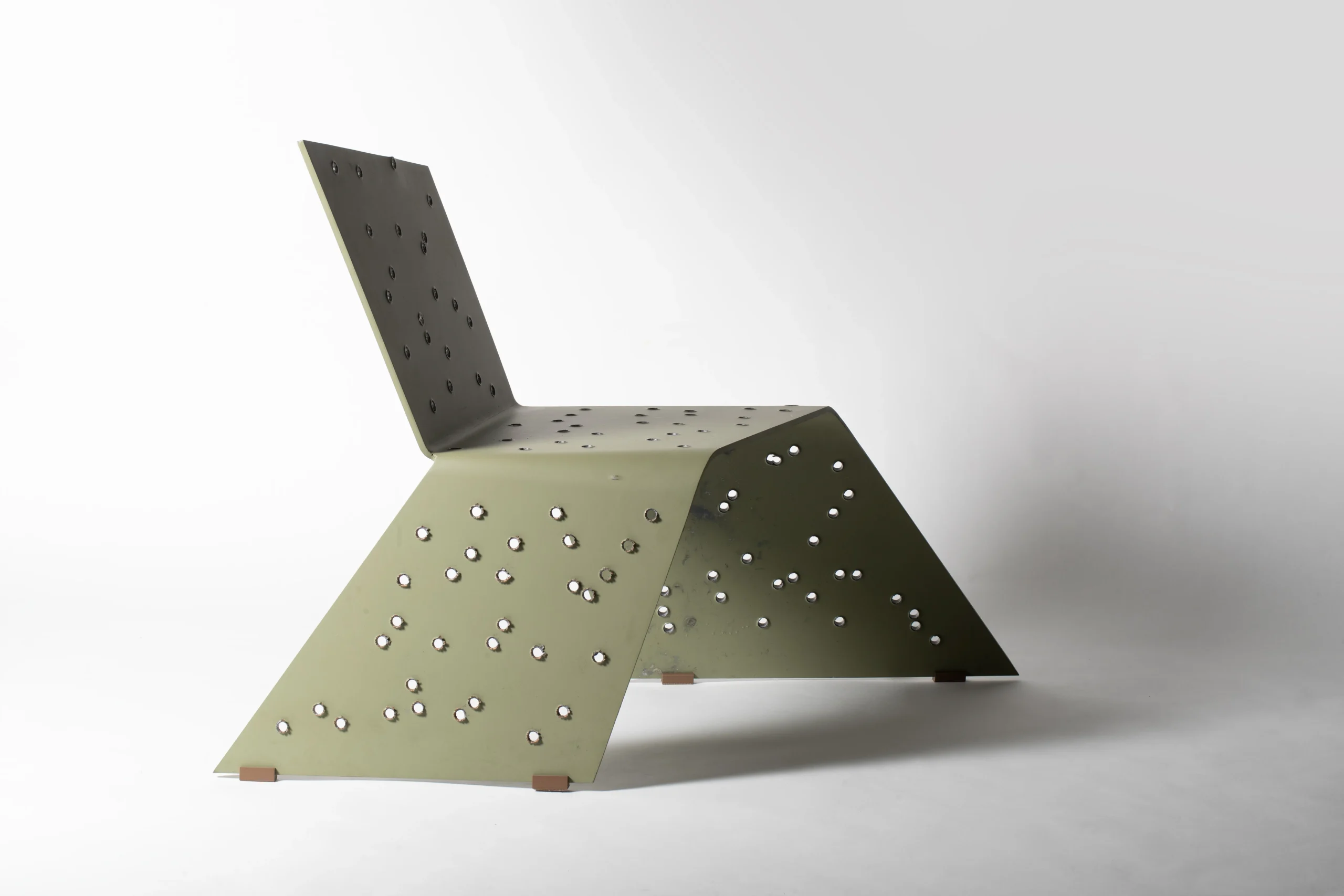
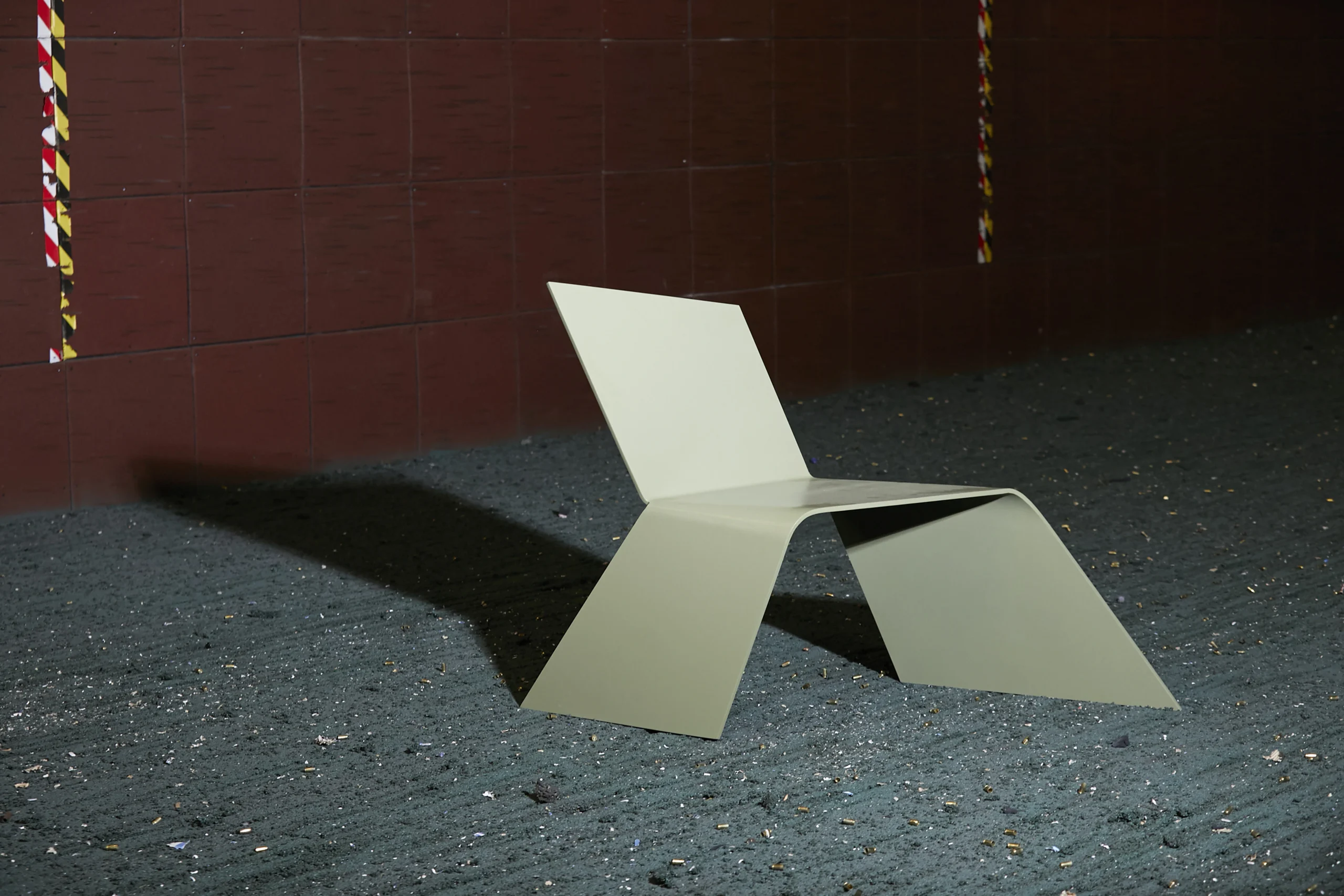
The chair consists of four interconnected planes: the seat, the backrest, and two legs. These planes are deformed parallelepipeds. The legs and backrest, which rise and fall from the seat plane, respectively, perform asymmetrical vertical and horizontal movements. One leg extends backward, while the other extends forward. The planes of the legs deform in such a way that the viewer perceives the chair as moving. The backrest also deforms, further enhancing the chair’s mobile, anthropomorphic character. This creates a tension between the familiar expectation of furniture and the dynamic, animated perception of the object, projecting a sense of life and strength while remaining structurally sound.
The Origin Story
The idea for a “walking chair” was conceived in 2017. The initial concept involved exposing the chair to military explosives. To this end, we began negotiations with the Ministry of Defense and conducted several test explosions. During these negotiations, two ministers changed, and ultimately the entire effort came to nothing.
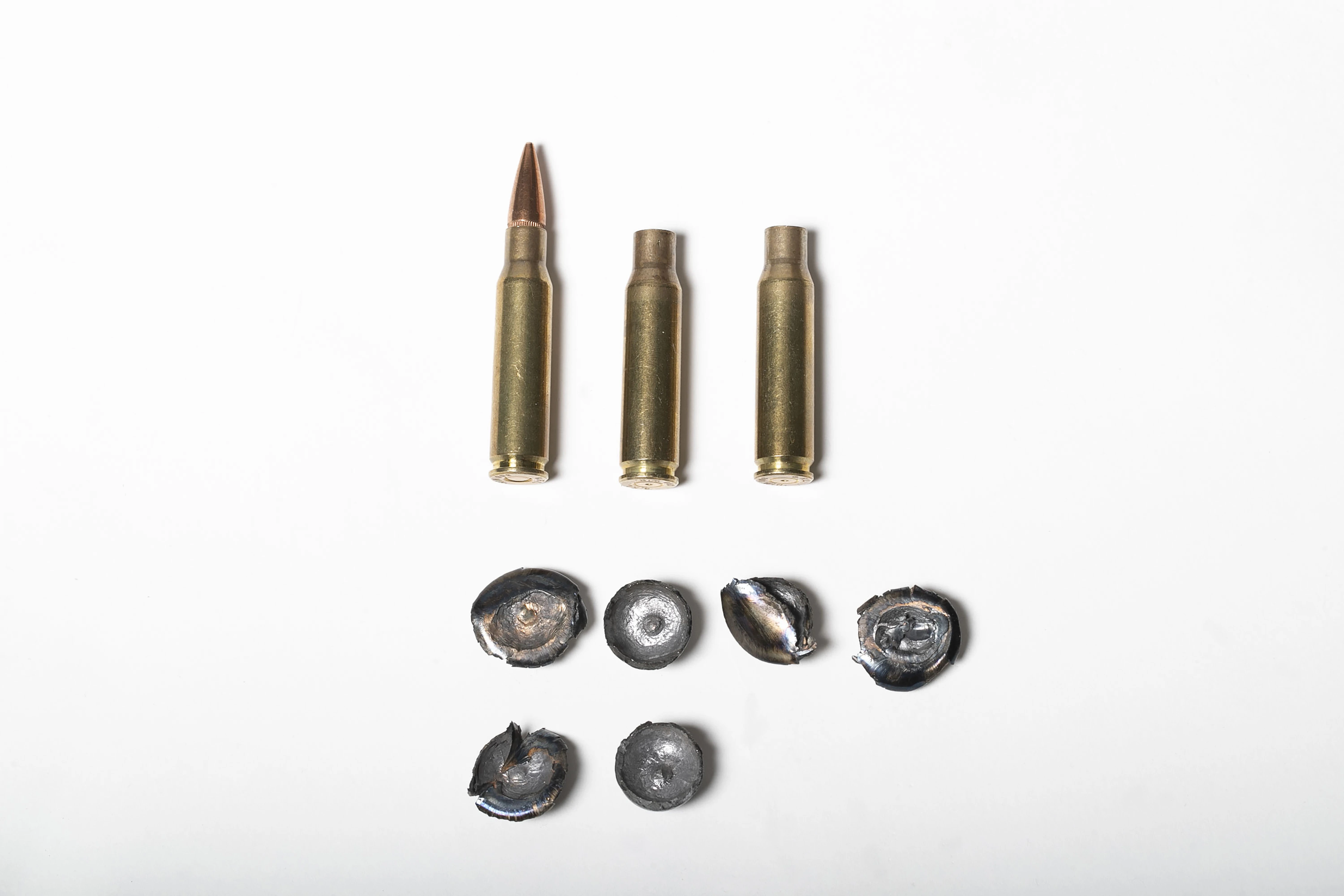
Work on the project resumed in 2022. We decided to fire the “walking chair” at a shooting range rather than expose it to explosives at the firing range. The firing distance was set at 12 meters. However, it soon became clear that the recoil from the chair’s surface during firing was very dangerous for those involved. Two of us, the photographer and the me were injured during the process. Accordingly, it was decided to increase the firing distance to 25 meters.
Technical Specifications & Provenance
Design: Xyz integrated architecture & Ana K.
Year: 2017-2023
Number of copies: limited edition
Dimension: 1100 X 750 X 920 mm
Material: 10 mm thick steel sheet.
Construction: Primary shape cut by laser. final form achieved and finished by hand.
Finish: All surfaces are professionally treated and painted. Bullet holes in the seat and backrest are
carefully finished to maintain structural integrity.
Defining Feature: 112 finished bullet holes piercing the structure.
Entry hole diameter: 12-13mm
Shooting distance: 12-25 m
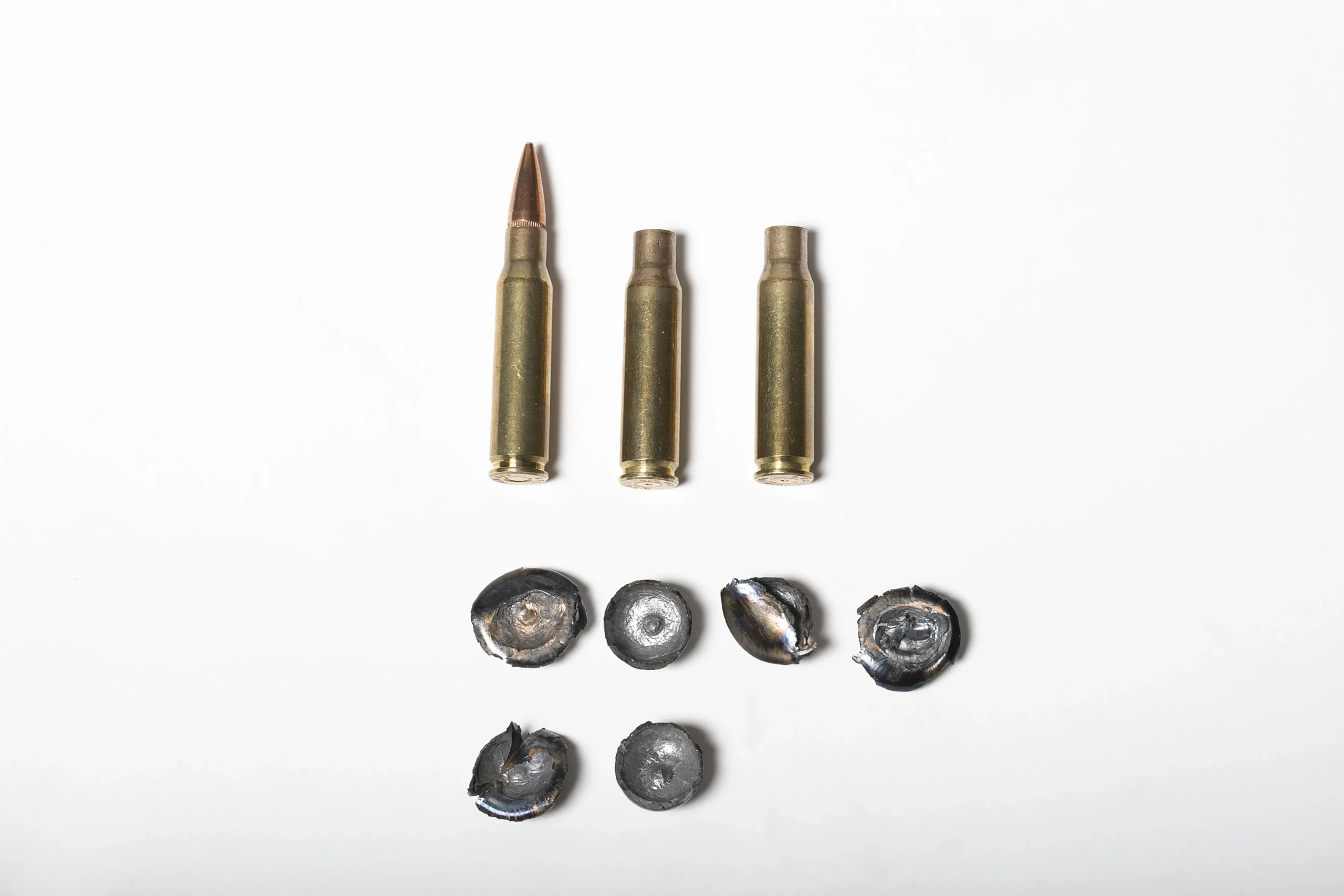
Rifle: Daniel Defense DD5® SBR (7.62X51MM)
Bullet Caliber: 308
Weight: 72 kg (158.7 lbs).
Functionality: Fully strong and functional despite its riddled structure.
Color: RAL 6013
Collaboration & Documentation
Steel Works: A. Barbaqadze
Paint Works: S&R Saroyan
Shooters: Utskho, Armen, George
Shooting range: Bethelground
Studio Photography: D. Sulakauri
shooting range Photography: L. Bakuradze
Videography: L.A.